
How Carotenoids Absorb UV at the Cellular Level (in Plain English)
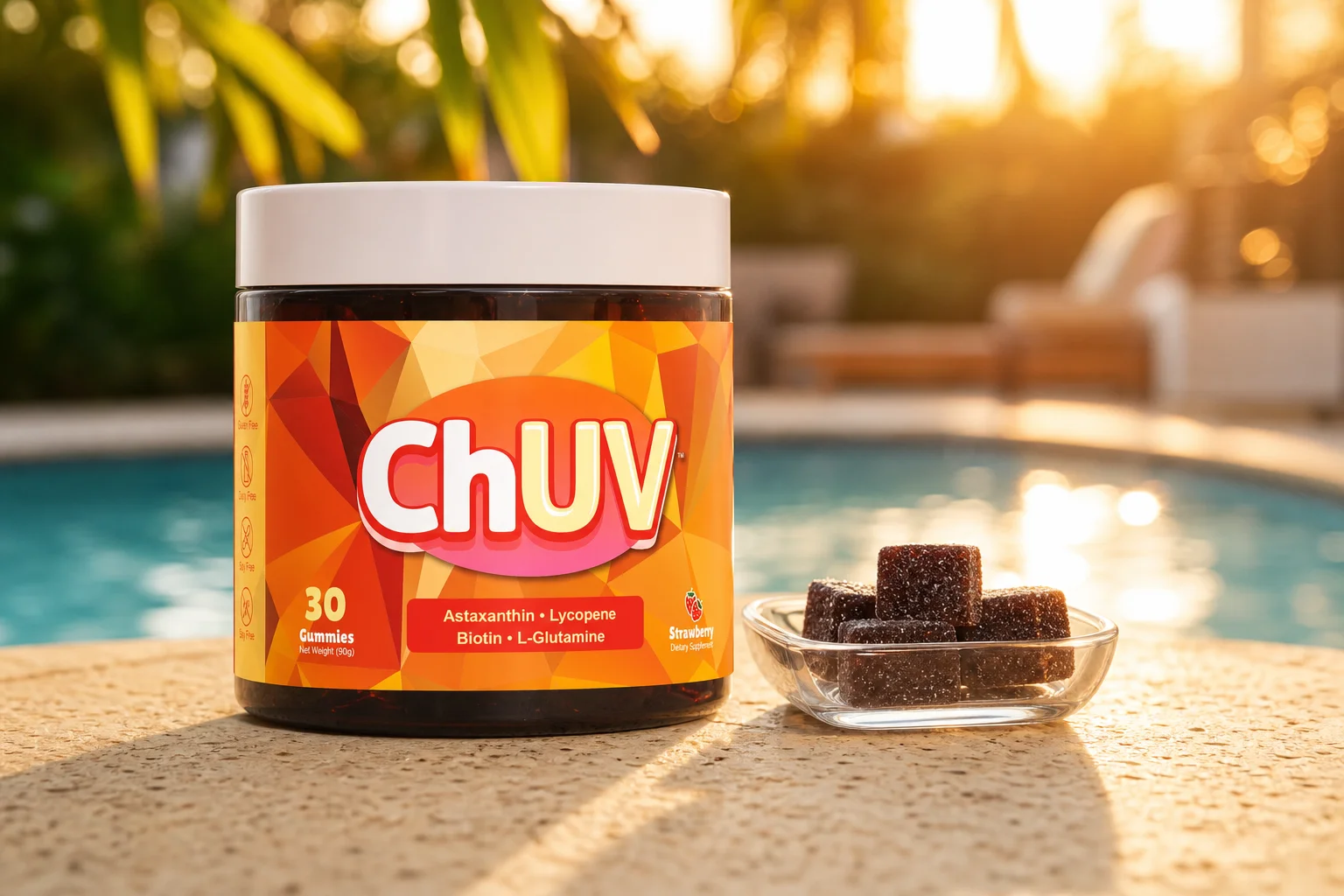
Carotenoid pigments don't block UV rays, they absorb specific wavelengths of light and dissipate the energy before it damages your cells. Here's how carotenoids absorb uv at the cellular level (in plain english): through a chain of double bonds that soaks up light like a molecular antenna, a mechanism ChUV Tanning Gummies is built around.
By CAYO Nutra Team, Supplement Specialists
What Carotenoids Are and Why Plants Made Them First
Carotenoids are a family of fat-soluble pigment molecules that plants, algae, and some bacteria produce as part of photosynthesis. Chlorophyll captures the red and blue light plants use for energy, but it leaves a gap in the green and blue-green range of the visible spectrum. Carotenoids fill that gap, which is why carrots read orange, tomatoes read red, and leafy greens hide a background of orange and yellow pigment behind their chlorophyll. The same chemistry that colors food also protects a plant's own cells from excess light energy, a job carotenoids carry over almost unchanged into human skin.
There are two broad carotenoid classes. Xanthophyll carotenoids, the group that includes lutein, zeaxanthin, and astaxanthin, carry oxygen atoms on their ring structure. Carotenes, sometimes shorthanded as the carotene lycopene group since it includes beta-carotene and lycopene, are pure hydrocarbon chains with no oxygen at all. Beta-carotene also converts into vitamin A in the body, a separate metabolic pathway that carotene lycopene compounds like lycopene itself don't share, which is part of why the two groups behave so differently once they reach skin tissue.
How Carotenoids Absorb UV at the Cellular Level (In Plain English)
Here is how carotenoids absorb uv at the cellular level (in plain english), stripped of jargon. Every carotenoid molecule is built around a long chain of alternating double and single carbon bonds called a polyene chain. That chain acts like a tiny antenna: electrons inside it are loosely held and jump to a higher energy state the moment a photon of the right wavelength hits them. Carotenoids absorb a specific slice of the visible light spectrum, mostly blue light and the blue-green range between about 400 and 500 nanometers, along with some UV-adjacent wavelengths at the edge of that range.
Once a carotenoid molecule absorbs that energy, it doesn't stay excited for long. Within trillionths of a second, the molecule releases the absorbed energy as harmless heat instead of passing it to nearby cell structures like DNA or lipid membranes. This is the core biological trick: carotenoids act as a release valve, converting light energy that would otherwise generate reactive, cell-damaging byproducts into heat that simply dissipates. The same conjugated bond structure lets carotenoids neutralize free radicals directly, before those radicals can react with proteins or fatty acids inside the cell. That same absorption and re-emission cycle is also what eventually builds visible color in skin: as carotenoids accumulate in the outer layers over weeks of consistent intake, the saturation deepens gradually rather than appearing all at once.

Xanthophyll Carotenoids vs Carotene Lycopene: Two Different Jobs in Skin
Not every carotenoid behaves the same way once it reaches skin cells. Xanthophyll carotenoids carry oxygen atoms on their structure, and that oxygen changes both how the molecule orients itself inside a lipid membrane and the color it produces once deposited in tissue. The carotene lycopene branch, being pure hydrocarbon, sits and reflects light differently.
This distinction matters more than most people realize. Beta-carotene is linked to carotenemia, a build-up that produces an unnatural yellowish-orange discoloration in skin, especially on the palms and soles, when intake runs high. Astaxanthin and lycopene deposit differently and produce a natural warm glow instead. That's part of why ChUV's formula leans on astaxanthin and lycopene rather than beta-carotene, avoiding beta-carotene's tinting risk altogether.
Why Oxidative Stress Makes Light Absorption Matter for Skin Health
UV and high-energy visible light don't just tan skin, they generate free radicals inside skin cells, a state researchers call oxidative stress. Left unchecked, oxidative stress breaks down collagen, damages cell membranes, and accelerates visible aging. Carotenoids matter for skin health because their light-absorbing, radical-quenching properties double as a defense system against this exact process.
Lutein zeaxanthin research is usually associated with eye health, since these two xanthophylls concentrate in the retina's macular pigment, but the same molecules also accumulate in skin tissue and offer measurable protection there. Oxidative stress from sun exposure is one of the most common triggers of premature skin aging, alongside smoking and pollution. That overlap is exactly why researchers increasingly study dietary carotenoids, not just topical sunscreen, as part of a full skin health strategy. These same pigments also drive the gut-to-skin tone pathway, the process that carries carotenoids from absorption into visible color.
Where ChUV's Astaxanthin and Lycopene Fit In
ChUV pairs astaxanthin and lycopene because both are potent carotenoids with strong, well-documented light-absorbing properties, and neither carries beta-carotene's discoloration risk. Astaxanthin is one of the most efficient singlet-oxygen quenchers among known carotenoids, and lycopene contributes its own broad absorption range across the visible spectrum. Together they support the skin's natural carotenoid pool the same way carotenoid-rich food sources like tomatoes, watermelon, and salmon do, just delivered at a consistent daily dose. Pairing the two makes sense chemically: astaxanthin's singlet-oxygen quenching and lycopene's broad-spectrum absorption cover different parts of the same defense system, so together they do more than either compound does alone.
None of this replaces sunscreen, and no oral carotenoid blocks UV the way a topical SPF does. What dietary carotenoids add is a complementary, cellular-level layer of oxidative defense that builds over weeks of consistent intake rather than a single application. If you want to talk through dosing, timing, or how this fits your current routine, Contact our team directly.
Frequently Asked Questions
Do carotenoids block UV rays like sunscreen does? No. Carotenoids absorb specific wavelengths of light and convert that energy into harmless heat, or use it to neutralize free radicals, but they don't form a physical barrier against UV the way mineral or chemical sunscreen filters do. They work as an internal, cellular-level layer of defense rather than a topical shield, so sunscreen still matters for direct UV protection.
What's the actual difference between xanthophyll carotenoids and carotenes? Xanthophyll carotenoids, like lutein, zeaxanthin, and astaxanthin, carry oxygen atoms on their structure. Carotenes, like beta-carotene and lycopene, are pure hydrocarbons without oxygen. That structural difference changes how each molecule sits inside cell membranes, how it reflects color, and how efficiently it quenches oxidative stress once absorbed.
Why does ChUV use astaxanthin and lycopene instead of beta-carotene? Beta-carotene builds up unevenly and can cause an unnatural yellowish-orange discoloration in skin at high intake. Astaxanthin and lycopene deposit differently, producing a natural warm glow without that same discoloration pattern, which is why ChUV's formula is built entirely around those two carotenoids.
How long does it take carotenoids to show up in skin? Visible changes build gradually as carotenoids accumulate in the outer layers of skin over weeks of consistent intake, not after a single dose. The exact timeline varies by person, diet, and dose consistency, so patience and regular use matter more than any single day's intake.
Can I get enough carotenoids from food alone? Carotenoid-rich food like tomatoes, watermelon, and leafy greens contributes to overall intake, but hitting a consistent daily dose through diet alone is difficult for most people to sustain. That's why a measured daily supplement is a more predictable way to maintain steady carotenoid levels.
See What Consistent Carotenoid Intake Builds Over Time
Understanding the cellular mechanism is the easy part, seeing it show up on your own skin takes consistency. Visible color builds gradually as carotenoids accumulate in the outer layers of skin over weeks of steady intake, not overnight, so the results become more noticeable the longer you stay consistent.


